











Why CKL is Backing Hamilton’s Next Chapter
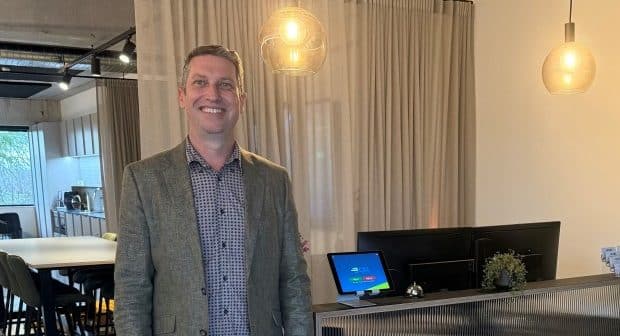
When CKL relocated its Hamilton office back to the CBD after almost 20 years in Te Rapa, it wasn’t simply a decision about premises.
According to CKL Director and Planner, Bevan Houlbrooke, it was a decision grounded in confidence: confidence in Hamilton, confidence in the CBD, and confidence in the opportunities the city is creating for businesses prepared to invest in its future.
Houlbrooke recently shared those views with around 90 members of the Waikato Chamber of Commerce at a Business After 4 event hosted by CKL in its new Hamilton CBD office.
Established in Hamilton in 1988, CKL has grown into a multidisciplinary consultancy with offices in Hamilton, Te Awamutu, Tauranga and Auckland, delivering planning, surveying, engineering and environmental services on projects throughout New Zealand. That national perspective gives the business a unique view of how cities and regions evolve, making its decision to return to Hamilton’s CBD all the more significant.
“We’d been talking about returning to the CBD for several years,” says Houlbrooke. “We wanted to be closer to our clients, councils and the wider professional community. We genuinely believed in the future of the CBD and more than anything, we wanted to be part of the conversations shaping Hamilton’s future.”
While the sale of CKL’s Church Road office accelerated the timing, the decision reflected something much bigger than a change of address.
“Hamilton is entering one of the most significant periods of change in its history,” Houlbrooke says. “Over the next few years we’ll see planning reform, new approaches to water infrastructure, local government reorganisation and major Fast-track developments. Together, those changes will reshape how Hamilton and the wider Waikato grow.”
Those reforms won’t just affect the property sector, they will influence where investment occurs, how infrastructure is delivered and how quickly new housing, commercial developments and community facilities can be brought to life.
One of the most significant shifts, Houlbrooke says, is that many of the decisions shaping future communities will increasingly happen through long-term strategic planning rather than individual consent processes.
“The biggest opportunity to influence future development will be during the strategic planning phase. Once those decisions have been made, many of the fundamentals are already locked in.”
Returning to the CBD has reinforced CKL’s belief that proximity still matters.
Since relocating, the business has experienced greater collaboration across its own team, stronger connections with clients and industry partners, and more opportunities to host professional organisations and events that contribute to conversations about the region’s future.
“Hamilton’s CBD still faces challenges, and no one would suggest otherwise,” Houlbrooke says.
“But cities evolve. We’ve seen that throughout CKL’s history, and we’re optimistic about where Hamilton is heading. We wanted to be part of that future rather than watching it from the sidelines.”
For CKL, returning to the CBD was an investment in the future of the city that has been home to the business for almost four decades.
As Hamilton enters its next chapter, businesses, developers and landowners will all face important decisions about growth, investment and opportunity.
If you’re considering your next project, talk to the CKL team about how these changes could influence your plans. Visit www.ckl.co.nz
See the full article online at wbn.co.nz
More Articles

16 Oct 2026
Love the Centre Awards Reveal Unique “Under Construction” Venue

15 Oct 2026
Discover the magic of Stories in the Garden

13 Oct 2026
Halloween in Hamilton’s central city: your guide to a frightfully good night out
7 Oct 2026